
Improving Your Construction Safety Culture
10/15/2026

By Deirdre Pearson
A construction safety culture is a shared set of beliefs, behaviors, and daily practices that make safe work the default on every jobsite from day one. It shows up in how leaders talk about safety, how training is delivered, how hazards get reported, and what happens when somebody calls a stop. A strong culture treats safety as a core operating value, not a poster in the breakroom. A weak one treats it as a compliance task.  The difference is measurable. Companies with strong safety cultures run fewer recordable injuries, lower workers’ comp premiums, and lower turnover than peers, according the business case for safety prepared by the Occupational Safety and Health Administration (OSHA). The six practices below are how mature contractors get there. The difference is measurable. Companies with strong safety cultures run fewer recordable injuries, lower workers’ comp premiums, and lower turnover than peers, according the business case for safety prepared by the Occupational Safety and Health Administration (OSHA). The six practices below are how mature contractors get there.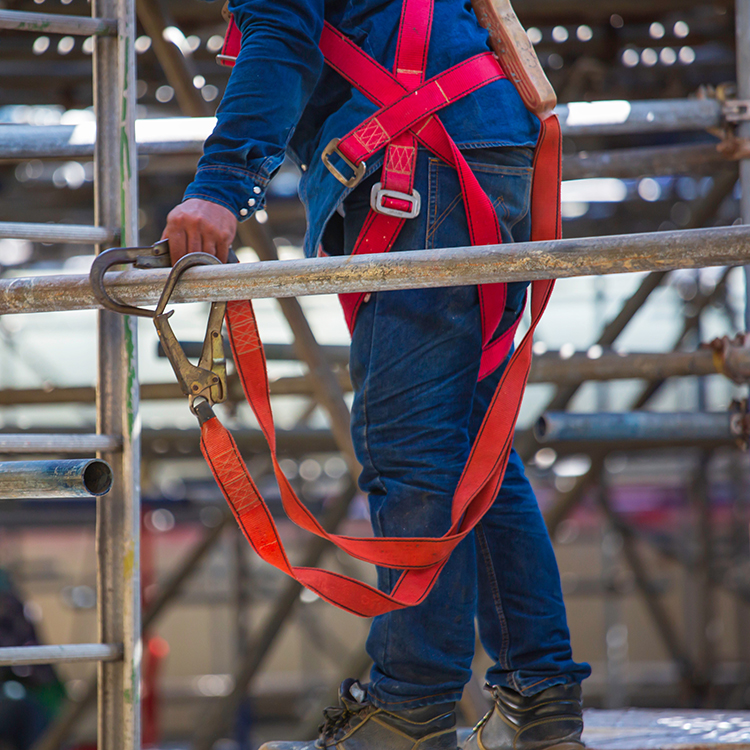 1. Lead Safety from the Top to Set the Standard 1. Lead Safety from the Top to Set the StandardA safety culture starts in the executive suite. Workers read leadership behavior fast. If the owner walks a site without a hard hat or the project manager pushes a crew past a fatigue limit to hit a deadline, “safety first” becomes meaningless in a week.
Get safety on every executive agenda. Tie it to performance reviews for superintendents and project managers. Talk about it in client meetings. The Center for Construction Research and Training (CPWR) Safety Climate Assessment Tool measures owner and leadership involvement as one of eight leading indicators of a healthy jobsite climate, and it’s the one that pulls the rest of the system into line.
2. Make Training Continuous, Not One-and-Done
3. Get Workers Involved in the Safety Program
The crews doing the work see hazards before anyone in a trailer does. A safety culture that ignores them caps out at compliance. One that pulls them in catches problems earlier and changes faster.
Practical moves that work:
4. Hold Everyone Accountable, from Owner to Apprentice
Accountability has to apply equally or it doesn't apply at all. If the rule is "no phones in lift zones" and the foreman gets a pass, the rule is dead.
Write the rules down. Make them visible. Train every worker on them in their primary language. Then build a consequence ladder that everyone, including leadership, moves through the same way. Stop-work authority is non-negotiable; any worker on any site has to be able to halt work for an unsafe condition without fear of retaliation.
Tie accountability into your subcontractor relationships, too. General contractors increasingly score subs on Experience Modification Rate (EMR), OSHA logs, and safety program maturity during prequalification, and that scoring is now part of who wins which bid.
5. Reward Safe Behavior, Correct Unsafe Behavior
Most incentive programs measure the wrong thing. Rewarding crews for "X days without an incident" pushes near-misses underground because reporting one breaks the streak. The crew goes home with a $50 gift card; you go home blind to the next near-miss that would have been the actual injury.
Reward leading indicators instead:
Correct unsafe behavior in real time and in private when possible. A safety culture that humiliates a worker for a mistake is one that hides mistakes.
6. Run Daily Site Inspections and Safety Huddles
Daily rituals make safety automatic. Two are worth the time on every site.
Pre-shift inspection: Walk the site before crews start. Check fall protection, scaffolds, ladders, electrical, housekeeping, personal protective equipment (PPE) staging, and traffic patterns. Log what you find. Fix what's fixable on the spot.
Daily safety huddle: Five to ten minutes, every crew, every shift. Cover the day's task, the specific hazards tied to that task, the controls in place, and any change from yesterday. End with a pause for crew questions.
These two habits are where the rest of the program gets enforced. Skip them and the policy binder becomes decoration.
What Happens When Safety Culture Slips?
Slippage is rarely a single failure. It compounds. The list below shows the typical pattern and the early signals worth watching.
The pattern is recoverable, but only if you watch leading indicators. Lagging indicators—OSHA recordables, EMR, lost-time days—tell you what already happened.
Bring Safety into Your Subcontractor Bidding Workflow
Safety culture isn't only an operational story. It's a bidding story. General contractors and owners increasingly prequalify subs partly on safety records, and subs with strong programs win more invitations to bid.
ConstructConnect® Bid Management gives general contractors a single place to run sub prequalification, store EMR and OSHA logs, and surface safety performance alongside cost and schedule data when assembling the bid list. For subs, a clean safety record visible inside Bid Management is part of how you stay on more bid lists, longer.
See Bid Management in action on your next project.
Frequently Asked Questions (FAQs)
What is a construction safety culture? A construction safety culture is the shared beliefs, behaviors, and daily practices a contractor uses to make safe work the default on every jobsite. It includes leadership commitment, worker involvement, training cadence, accountability, communication, and how hazards get reported and resolved. Strong cultures treat safety as a core operating value; weak ones treat it as a compliance checkbox.
How long does it take to improve safety culture in construction? Meaningful culture change typically takes 12 to 36 months. Tactical wins—better toolbox talks, more near-miss reports, a working stop-work policy—can show up in 60 to 90 days. Lagging metrics like EMR and recordable injury rates usually take a full policy year or two to move.
What are OSHA's Focus Four hazards? OSHA's Focus Four are falls, struck-by, caught-in/between, and electrocution. These four hazard categories account for the majority of construction fatalities every year.
Who is responsible for safety culture on a construction site? Everyone, but accountability rolls up to the top. Executives set the tone and budget. Project managers and superintendents enforce it daily. Safety officers train and audit. Foremen and crew leads model behavior. Individual workers hold stop-work authority. A culture in which only the safety manager owns safety is not a culture; it's a program on a shelf.
How do you measure construction safety culture? Most mature programs combine leading and lagging indicators. Leading indicators include hazard observations submitted, near-miss reports, stop-work events, training completion rates, and committee participation. Lagging indicators include OSHA recordable rates, lost-time injuries, workers' comp claims, and EMR. CPWR's Safety Climate Assessment Tool is a free, validated survey contractors can use to benchmark eight leading indicators against industry norms.
What's the return on investment in a strong safety culture? OSHA estimates every $1 invested in workplace safety returns $4 to $6 in savings through fewer injuries, lower insurance premiums, less rework, and reduced litigation. The agency's Voluntary Protection Program participants report savings of more than $110 million per year collectively, with injury rates running below half the industry average.
Deirdre Pearson is a Content Marketing Manager at ConstructConnect®, specializing in contractor and manufacturer-focused articles. She showcases the value of ConstructConnect’s project data, analytics, and bid management solutions, including Project Intelligence, Analytics, and Bid Management. With her experience crafting diverse content for the preconstruction industry, Deirdre delivers well-researched and insightful perspectives on every topic she covers.
Source:ConstructConnect
Back To News |
||

|
||
|
© 2026 Small Business Exchange, Inc. |
||